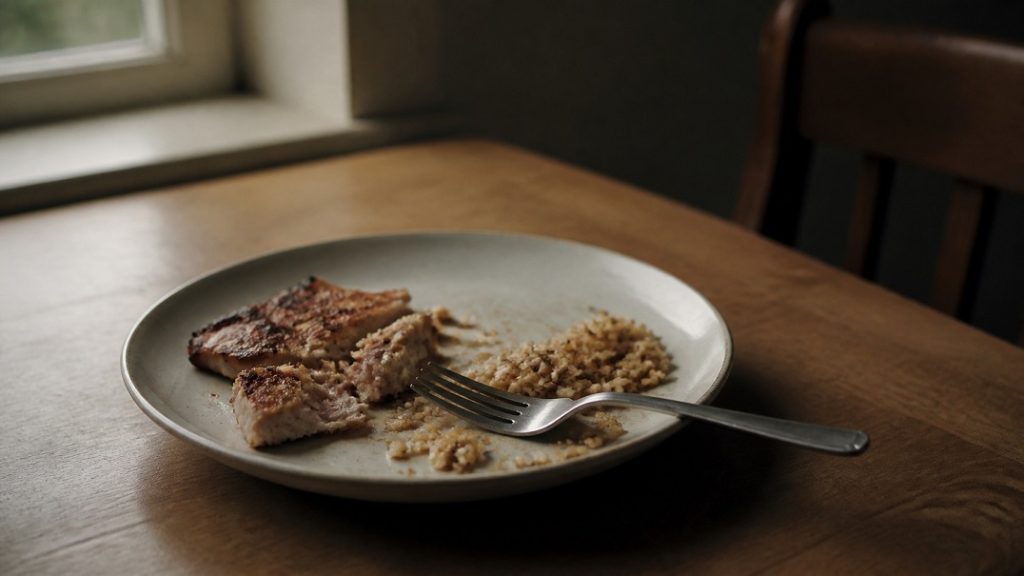
Telling someone to simply eat more protein is easy advice to give and often surprisingly hard to follow, especially for someone whose appetite has quietly shrunk over the past several years. If food does not sound as appealing as it used to, or if you feel full after a few bites, being told to eat larger portions of chicken or beans is not helpful advice. It is often advice that gets nodded at politely and then ignored, not out of stubbornness, but because it does not match the actual problem.
Why Appetite Often Declines With Age
A reduced appetite in older age is common enough that researchers have a name for it, sometimes called the anorexia of aging, distinct from the eating disorder that shares part of the name. Several factors tend to contribute at once, including hormonal changes that affect hunger signals, a diminished sense of taste and smell that makes food less appealing, slower stomach emptying that leads to feeling full sooner, and side effects from common medications that can suppress appetite or alter taste.
A review discussing this pattern, published in Nutrients, notes that this decline in appetite is widespread enough among older adults that it represents a genuine physiological shift, not simply a matter of willpower or habit.
Why Volume-Based Advice Misses the Point
Most standard nutrition advice, including a lot of general protein guidance, assumes a reasonably normal appetite and simply asks people to eat larger portions of protein-rich foods. For someone already struggling to finish a modest meal, being told to eat an even bigger piece of chicken is not a realistic solution. It treats the problem as one of willpower or knowledge, when the actual barrier is physical: a genuinely reduced capacity or desire to eat large volumes of food at all.
The Real Goal Is Density, Not Volume
The more useful framing for someone in this position is protein density rather than protein volume, meaning the goal becomes fitting more protein into a smaller amount of food, rather than fitting more food into the same limited appetite. This is a genuinely different strategy than standard advice, and it is the piece that most generic nutrition guidance leaves out entirely.
Practical Strategies That Actually Work
Fortify Foods You Are Already Eating
Rather than adding entirely new foods, small additions to familiar meals can meaningfully raise protein content without increasing volume much at all. Stirring powdered milk or a scoop of unflavored protein powder into oatmeal, soup, or mashed potatoes, or adding an extra egg to a dish that already includes eggs, are simple ways to boost protein without asking someone to eat more overall.
Favor Small, Frequent, Protein-Focused Meals
Three large meals a day can feel overwhelming with a limited appetite. Five or six smaller meals and snacks, each built around a modest protein source, tend to be more manageable and, over the course of a day, can add up to more total protein than a person would get by pushing through three larger meals that mostly go unfinished.
Use Liquid Nutrition Strategically
Drinking calories and protein is often easier than chewing and swallowing them, particularly for someone dealing with fatigue or dental issues. A smoothie made with milk, yogurt, and a scoop of protein powder, or a store-bought nutrition drink, can deliver 20 grams of protein or more without requiring any real appetite for solid food.
Address Underlying Causes Where Possible
Since medications, dental problems, and undiagnosed conditions can all suppress appetite, it is worth reviewing these possibilities with a doctor rather than assuming reduced appetite is simply an unavoidable part of aging. Sometimes a medication adjustment or addressing a dental issue can meaningfully improve appetite on its own.
Make Eating More Enjoyable, Not Just More Efficient
Appetite is not purely a physical signal. It is also shaped by how appealing food looks, smells, and tastes, and by the social context around eating. Eating alone regularly, a common reality for many older adults, is associated with reduced food intake compared to eating with others. Where possible, sharing meals with family, a friend, or even a scheduled phone call during dinner can make eating feel less like a chore and more like something worth showing up for, which in turn can support better intake over time.
Setting Realistic Expectations
For someone with a genuinely reduced appetite, reaching the higher protein targets recommended for older adults may take longer and require more deliberate planning than it would for someone with a typical appetite. That is a realistic starting point, not a failure. Small, consistent improvements in protein density, built gradually into meals someone already tolerates well, tend to produce steadier progress than an ambitious plan that assumes an appetite that is not actually there.
When to Loop In a Professional
If appetite has declined sharply, or if it is accompanied by unintentional weight loss, it is worth bringing this up with a doctor rather than trying to manage it alone. A registered dietitian, in particular, can be a valuable resource for building a realistic, personalized eating plan, and many are experienced specifically in working with older adults who are managing a reduced appetite alongside a genuine need for more protein. This kind of professional guidance often uncovers simple, practical adjustments that are easy to miss when navigating the situation without support. Some doctors can also prescribe or recommend medical nutrition products specifically designed for this situation, which are formulated to pack a large amount of protein and calories into a small volume, sometimes covered in part by insurance depending on the underlying medical circumstances. Bringing a simple food log to that appointment, even just a few days’ worth, can help a dietitian spot specific gaps and suggest changes tailored to what you already eat, rather than a generic plan that does not reflect your actual habits.
Where to Go From Here
Our guide to the best protein sources for older adults includes specific food and preparation suggestions for exactly this situation, and our overview of how much protein you actually need after 50 can help you set a realistic target to work toward at whatever pace makes sense for you.