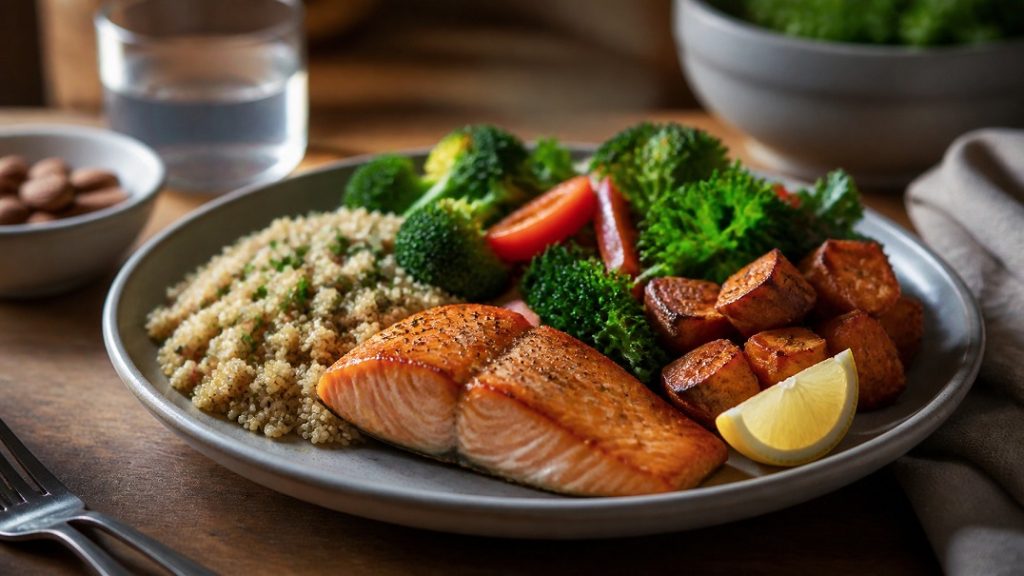
Exercise tends to get most of the attention when people talk about rebuilding strength after 50, and it deserves that attention. But without the right nutrition behind it, even a well-designed exercise routine has to work much harder than it should. Muscle is built and maintained from the raw materials you give it, and as the body ages, those raw material needs actually shift in ways that catch a lot of people off guard.
Why Nutrition Becomes More Important, Not Less, With Age
There is a common and understandable assumption that nutrition needs simplify with age, since activity levels and calorie needs often decrease. In reality, the picture is more complicated. While total calorie needs may drop somewhat, the amount of protein needed to maintain and build muscle actually increases, creating a situation where the same eating habits that worked fine at 35 can quietly fall short at 55 or 65.
This happens partly because of a phenomenon researchers call anabolic resistance, where aging muscle becomes less responsive to the same amount of protein that would have triggered muscle building in a younger body. In practice, this means older adults often need more protein per meal, not just more protein per day, to get the same muscle-building signal a younger person gets from a smaller amount.
The Core Nutrition Principles for Rebuilding Strength
Several nutrition factors show up consistently in research on preserving and rebuilding muscle in older adults. None of them require an extreme or complicated diet, but each one plays a distinct role.
Adequate, Well-Distributed Protein
Protein is the most important single nutrition factor for muscle maintenance, and both the total daily amount and how it is spread across meals matter. Many older adults eat the bulk of their protein at dinner and very little at breakfast, which research suggests is a less effective pattern than spreading protein more evenly throughout the day.
Enough Total Calories
Muscle cannot be built or maintained in a significant calorie deficit, since the body prioritizes basic functions over muscle repair when energy is scarce. This does not mean weight loss and muscle preservation are incompatible, but it does mean an overly aggressive calorie restriction, especially without resistance training, tends to work against muscle goals rather than for them. A more moderate, gradual approach to any needed weight loss, paired with adequate protein and consistent resistance training, tends to preserve far more muscle than a rapid, low-calorie approach.
Meal Timing Around Activity
While total daily intake matters most, eating a source of protein within a couple of hours of a workout or a long walk can give the body an extra opportunity to use that protein for muscle repair, since exercise itself increases the muscle’s sensitivity to incoming nutrients for a period of time afterward. This does not need to be complicated. A glass of milk, a handful of nuts, or a small yogurt after activity is enough to take advantage of this window without requiring a specialized supplement or strict timing schedule.
Vitamin D and Key Micronutrients
Vitamin D plays a direct role in muscle function, and deficiency is common in older adults, particularly those with limited sun exposure. Other nutrients, including calcium, magnesium, and omega-3 fatty acids, also support the broader systems that keep muscle functioning well, even though their role is less direct than protein’s.
Consistent Hydration
Muscle tissue is largely water, and even mild dehydration can measurably affect strength and endurance. Older adults are more prone to under-hydration due to a naturally reduced sense of thirst, which makes deliberate attention to fluid intake more important than it might have been at a younger age. Keeping a water bottle within easy reach throughout the day, rather than relying on feeling thirsty as a signal to drink, is a simple habit that tends to help considerably.
Common Nutrition Mistakes That Undermine Muscle Goals
A few patterns show up repeatedly in people who are otherwise trying to eat reasonably well but still struggle to preserve or rebuild muscle. Skipping breakfast, or eating a breakfast with little to no protein, is one of the most common, since it means the day often starts with several hours of minimal muscle-building stimulus. Another common pattern is treating protein as a side note to a meal built primarily around carbohydrates, such as a large plate of pasta with a small amount of meat, rather than making protein the anchor of the meal. Finally, many people underestimate how much their protein needs have actually changed with age, continuing to eat according to habits formed decades earlier without ever recalculating what their body now requires.
Why This Cannot Be Separated From Exercise
Nutrition and exercise work together rather than independently. Protein and adequate calories provide the raw materials for muscle repair, but without a training stimulus, particularly resistance exercise, the body has little reason to actually use those materials to build or preserve muscle. Similarly, a well-designed exercise program without adequate nutrition behind it will produce a smaller result than it otherwise could, since the body cannot repair and strengthen muscle tissue it does not have the resources to rebuild.
A Realistic Starting Point
None of this requires an overnight overhaul of how you eat. A reasonable starting point involves including a source of protein at every meal rather than concentrating it at dinner, paying attention to whether you are eating enough overall rather than restricting calories aggressively, and considering whether your vitamin D levels have actually been checked recently. Small, consistent changes in these areas tend to produce meaningfully more muscle-supportive results than a single dramatic diet change that is hard to sustain.
Where to Go From Here
This overview covers the broad principles, and the rest of the articles in this Nutrition category get specific. Our guide to how protein needs change with age lays out exact targets, while our list of the best protein sources for older adults translates those targets into real food choices, including options for people dealing with a smaller appetite.