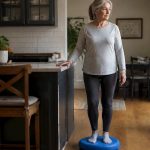
You don’t need a garage full of equipment to rebuild strength after 50, but the right few pieces can make consistency a lot easier, and consistency is what actually produces results. This Gear & Products category of articles is a practical guide to the equipment, tools, and products that genuinely support strength training, balance work, and independent living at this stage of life, without the flashy marketing built for a younger, performance-focused audience.
Why This Category Exists
Most fitness equipment guides are written for people chasing personal records or aesthetic goals, and the products they recommend reflect that. A 45-pound adjustable dumbbell set or a heavy-duty power rack makes sense for a serious lifter; it’s overkill, and sometimes genuinely unsafe, for someone easing back into strength training after years away from it, or starting for the first time. This This Gear & Products category is built specifically around what this audience actually needs: manageable weight ranges, safety-focused designs, and equipment that fits into a home, not a home gym.
How This Category Is Organized
The articles here are organized around specific categories of equipment, each covering what the category is good for, what features actually matter, and what to watch out for, without assuming you already know the terminology or have used similar products before.
| Category | Best For |
|---|---|
| Resistance bands | Low-cost, low-injury-risk strength training, especially for beginners |
| Adjustable dumbbells | Progressive strength training in a small footprint |
| Grip strength trainers | Targeted hand and forearm strength, useful alongside broader training |
| Balance pads and discs | Fall-prevention and balance-specific training |
| Home safety gear | Reducing fall risk and supporting daily independence |
| Protein powders | Supplementing protein intake when food alone falls short |
| Wearables and trackers | Monitoring activity and progress over time |
A Note on What You’ll Find Here (and What You Won’t)
This category focuses on genuinely useful categories and the features worth prioritizing within them. It does not include fabricated specific product recommendations, exaggerated claims, or pricing pulled from thin air. Where a specific product recommendation would normally appear, you’ll instead find guidance on what to look for so you can evaluate options yourself, whether that’s here on this site once we’ve tested specific products, or on a retailer’s page. If you’re looking for a trustworthy product recommendation and don’t see one yet, that’s intentional rather than an oversight.
Who This Category Is Written For
The equipment guides in this category assume a few things about the reader that are worth stating directly. First, that you’re likely new to structured strength training, or returning to it after a long break, rather than an experienced lifter looking for advanced equipment. Second, that your goals center on function and independence, carrying groceries, playing with grandchildren, staying steady on your feet, rather than building visible muscle or competing in a sport. Third, that you’re training primarily at home, whether by preference or circumstance, rather than at a gym with a full range of machines available. If that describes you, the recommendations and buying criteria here should translate directly into your situation without much adjustment.
Starting Simple Before Buying Anything
It’s worth saying plainly: you don’t need to buy anything to start. Bodyweight exercises, covered in resistance training basics for people who’ve never lifted weights, are a legitimate and complete starting point, and many people train effectively for months using nothing but their own body weight and basic household items like a sturdy chair or a couple of water bottles. Equipment becomes genuinely useful once those exercises stop feeling challenging, which is usually a sign that progressive resistance, like a band or a light dumbbell, will help you keep making progress.
How to Think About Value in This Category
A common mistake is assuming that more expensive equipment is automatically better equipment. In this category, the opposite is sometimes true: a set of $20 resistance bands can support months or years of genuine strength progress, while an expensive piece of equipment with features irrelevant to this audience, like an app-connected smart handle or an aesthetic upgrade, doesn’t necessarily produce better results. When evaluating any product in this category, the questions worth asking are whether it’s safe to use without supervision, whether it fits the specific way you plan to train, and whether it will still be useful once you’ve made some progress, not just on day one.
Safety Considerations That Apply Across This Whole Category
A few safety principles apply broadly enough to mention here rather than repeating in every article. Any equipment involving moving weight, adjustable dumbbells in particular, should have a secure, unambiguous locking mechanism, since a weight coming loose mid-exercise is a genuine injury risk. Resistance bands should be inspected regularly for small tears or thinning, which can lead to a sudden snap. And any balance-related equipment should be used near a wall or sturdy furniture for support, especially when you’re still getting used to it. These aren’t reasons to avoid this equipment, just habits worth building from the start.
Where to Go From Here
If you’re deciding what to buy first, best resistance bands for home strength training after 50 is a reasonable starting point given how affordable and versatile bands tend to be. If you’ve already got some experience and are looking to add progressive weight training, adjustable dumbbells worth buying for home use covers what to look for.