The gear covered in this article won’t build strength or improve your fitness, but it does something just as important: it reduces the number of situations where a moment of instability turns into a fall. A modest investment in a few well-chosen safety products can make a meaningful difference in both actual risk and day-to-day confidence moving around your own home.
Why This Category Deserves Real Attention, Not an Afterthought
According to the National Institute on Aging, many falls happen at home, where people spend much of their time and tend to move around without thinking much about safety. The good news is that a relatively small number of targeted changes address a large share of the risk, which means this category rewards a focused approach rather than trying to safety-proof every corner of a home at once.
Grab Bars: The Highest-Impact Purchase
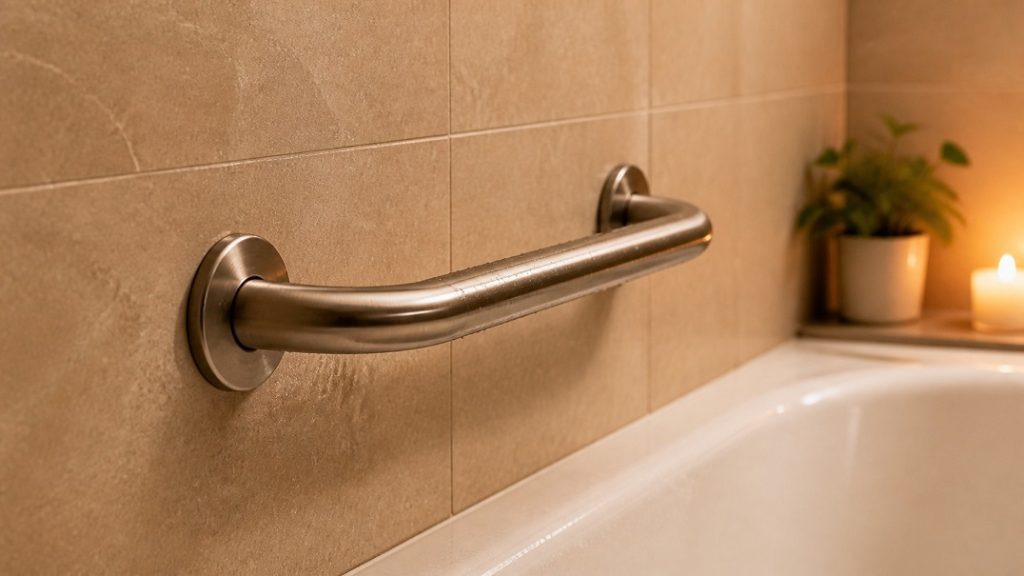
Grab bars are consistently identified as one of the most effective home safety additions, particularly in the bathroom, where hard surfaces and low, awkward standing positions combine to create real risk.
Installation Matters More Than the Bar Itself
A grab bar is only as reliable as its mounting. Bars intended for regular, weight-bearing use, near a toilet, inside a shower, or beside a tub, should be anchored directly into wall studs or with hardware specifically rated for the wall type, ideally by a professional installer or a contractor experienced with aging-in-place modifications. A bar that isn’t properly anchored can pull away from the wall under sudden weight, which is worse than having no bar at all, since it creates a false sense of security.
Suction-Cup Bars: A Secondary Option, Not a Primary One
Suction-cup grab bars are widely available and don’t require drilling, which makes them appealing for renters or anyone hesitant about a permanent installation. However, suction can weaken over time, with temperature changes, or with age of the suction cup material, making these better suited as a secondary, light-use aid rather than the primary support for a task like standing up from a bathtub.
A Simple Rule: Towel Racks Are Not Grab Bars
It’s worth stating plainly, since it’s a common and dangerous mix-up: a standard towel rack is not designed to bear body weight and should never be relied on as a grab point. Some products are designed to serve as both a grab bar and a towel rack, rated to bear real weight while also holding a towel, and these dual-purpose bars are a reasonable option if aesthetics or space are a concern.
Non-Slip Mats and Strips
Wet, hard surfaces are one of the most common fall triggers, and non-slip mats or adhesive strips are a low-cost way to address that risk directly in the bathtub, shower floor, and any other surface that regularly gets wet.
| Type | Best For |
|---|---|
| Textured rubber bath mat | Inside the tub or shower floor |
| Adhesive non-slip strips or dots | Directly on a tub or shower floor without a full mat |
| Non-slip entry mats | Just inside exterior doors, where rain or snow gets tracked in |
| Non-slip stair treads | Wooden or tile stairs prone to becoming slick |
When choosing a bath mat, look for one with drainage holes or a design that doesn’t trap standing water underneath, since a mat sitting in trapped water can develop mold and become a slip hazard itself over time.
Lighting Solutions
Poor lighting compounds nearly every other fall risk factor by making it harder to judge distances, spot obstacles, or see a step change accurately. A few relatively inexpensive additions address this directly.
- Motion-activated night lights for hallways, bathrooms, and the path between a bedroom and bathroom.
- Bright, easily accessible light switches placed near room entrances rather than requiring a walk across a dark room to reach one.
- A well-charged flashlight kept on a nightstand in case of a power outage.
Raised Toilet Seats and Shower Chairs
These two products address a specific, high-demand movement: rising from a low seated position, which requires meaningful leg strength and can be a genuine challenge as that strength declines. A raised toilet seat reduces the distance and effort required to stand, while a shower chair removes the need to stand for an entire shower, reducing both fatigue and the risk of a fall during a task that combines water, a hard surface, and extended standing time.
Stair and Hallway Handrails
Stairs demand more strength and balance than nearly any other routine movement in a home, and a secure handrail is one of the more overlooked safety upgrades, particularly in older homes where a single, loose, or low railing may have been adequate decades ago but no longer meets a reasonable safety standard. Ideally, stairs should have a graspable handrail on both sides, though even adding a second rail to a staircase that currently has only one on one side is a meaningful improvement. As with grab bars, secure anchoring into the wall structure, not just cosmetic hardware, is what determines whether a handrail will actually hold weight in an emergency.
Medical Alert Devices and Communication Tools
Even with every safety modification in place, having a reliable way to call for help if something does happen adds an important layer of protection. A wearable medical alert device, worn as a pendant or wristband, allows a call for help to be placed with the press of a button, without needing to reach a phone. For those less interested in a dedicated device, simply keeping a well-charged phone within reach in the bathroom and bedroom, the two rooms where a person is often alone and where many falls occur, accomplishes much of the same goal at no additional cost.
A Reasonable Starting Point If You Can Only Do a Few Things
If budget or time limits how much you can address at once, the bathroom is the place to start. A properly installed grab bar near the toilet and inside the shower or tub, paired with a non-slip mat and a nightlight, addresses several of the highest-risk moments in a typical day for a relatively modest combined cost. Additional changes, stair railings, entryway mats, kitchen adjustments, can follow as time and budget allow.
Where to Go From Here
For a fuller room-by-room approach to home safety, see adapting your home and routine as strength changes. If fall risk itself, separate from the home environment, is a specific concern, how strength loss affects balance, falls, and independence covers the underlying strength and balance connection.