Hydration rarely comes up in conversations about building or preserving muscle, which is a little strange given how directly it affects the way muscles actually work. Protein and exercise get most of the attention, and reasonably so, but a body that is running low on fluid is working with a real handicap that no amount of protein or training can fully compensate for.
Why Water Matters So Much for Muscle
Muscle tissue is roughly 75 percent water by composition, more than almost any other tissue in the body besides blood. Water plays a role in nearly every process involved in muscle function, including transporting nutrients into muscle cells, removing metabolic waste products generated during activity, regulating body temperature during exercise, and maintaining the electrical signals that allow muscles to contract in the first place. When fluid levels drop, even modestly, these processes become measurably less efficient.
What the Research Shows About Dehydration and Strength
A number of studies have looked specifically at how dehydration affects physical performance, and the findings are fairly consistent: mild dehydration, often defined as a loss of around 2 percent of body weight in fluid, well before someone would necessarily feel thirsty, is associated with measurable declines in strength, endurance, coordination, and cognitive function. For an older adult already managing reduced muscle mass or strength, compounding that with even mild, unnoticed dehydration can meaningfully worsen day-to-day function, including balance and reaction time, both of which matter considerably for fall risk.
Why Older Adults Are More Prone to Dehydration
A Reduced Sense of Thirst
The body’s thirst signal naturally becomes less sensitive with age, meaning older adults often do not feel thirsty until they are already somewhat dehydrated. This is one of the more counterintuitive aspects of aging and hydration: the mechanism most people rely on to know when to drink becomes less reliable exactly when adequate hydration matters more.
Medications That Increase Fluid Loss
Many common medications prescribed to older adults, including diuretics used for blood pressure or heart conditions, increase fluid loss through urination. This is often a necessary and appropriate part of managing those conditions, but it does mean fluid needs may be somewhat higher for people taking these medications than general guidelines assume.
Less Efficient Kidney Function
Kidney function naturally declines somewhat with age, including a reduced ability to concentrate urine and conserve water as effectively as a younger body can. This means older kidneys generally need a steadier fluid intake to maintain the same hydration status a younger person could achieve with somewhat less deliberate effort.
Recognizing Dehydration Before It Becomes Obvious
Thirst is not a reliable early warning sign for older adults, so it helps to know a few other signals worth watching for, including dark yellow urine rather than pale yellow, dry mouth or lips, unusual fatigue, dizziness when standing up, and a noticeable drop in usual physical performance or coordination. None of these signs are unique to dehydration, but noticing a pattern, especially combined with low fluid intake earlier in the day, is a reasonable prompt to increase intake.
How Much Fluid Is Actually Needed
General guidance from health organizations, including information summarized by the National Institute on Aging, suggests most older adults aim for somewhere around 6 to 8 cups of fluid a day, though individual needs vary considerably based on activity level, climate, certain medical conditions, and medication use. People managing heart failure or kidney disease in particular may have specific fluid restrictions or targets set by their doctor that differ from general population guidance, so it is worth checking your own situation rather than assuming a blanket number applies.
| Fluid Source | Contribution to Daily Hydration |
|---|---|
| Plain water | Most direct and reliable source |
| Milk | Contributes fluid along with protein and calcium |
| Soups and broths | Meaningful fluid contribution, especially in colder months |
| Fruits and vegetables | Many, like watermelon and cucumber, are largely water by weight |
| Coffee and tea | Contributes to fluid intake despite mild diuretic effect |
Practical Habits That Help
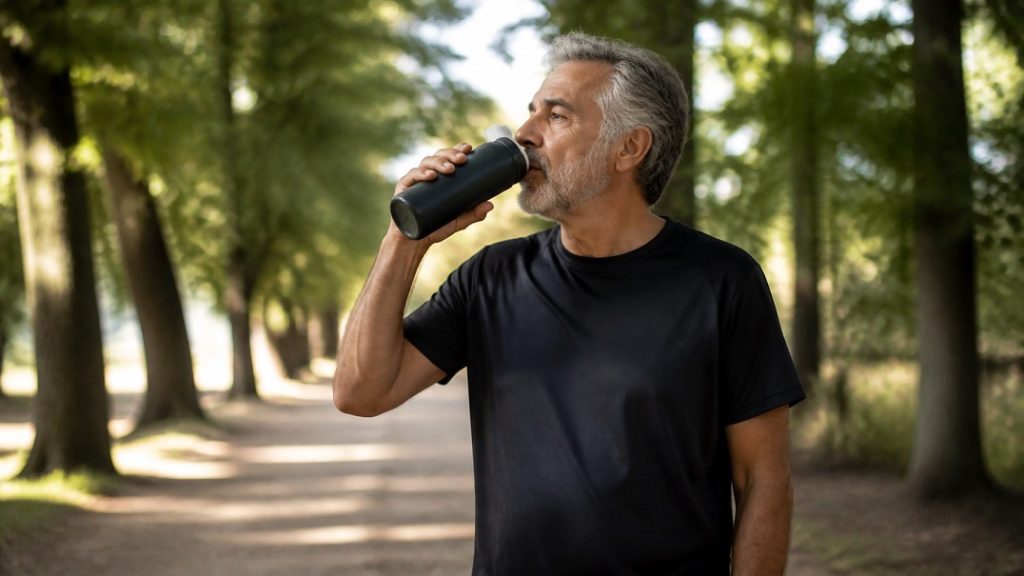
Since thirst is not a reliable cue, building hydration into a routine tends to work better than relying on feeling thirsty as a reminder. Keeping a filled water bottle or glass visible on a counter or desk, drinking a glass of water with each meal and medication dose, and setting a specific time, such as right after waking up, for a first glass of water are all simple habits that reduce reliance on an unreliable internal signal.
Hydration and Exercise Performance Specifically
Hydration matters particularly around exercise sessions, since physical activity increases fluid loss through sweat and breathing, on top of whatever baseline hydration status you started with. Being even mildly underhydrated going into a workout, whether a walk, a resistance training session, or any other structured activity, can make the same effort feel harder than it should and can reduce the actual benefit gained from the session. Drinking a glass of water in the hour or two before exercising, and having water available during longer sessions, is a simple way to make sure hydration is not quietly working against your efforts to build strength.
A Word on Alcohol and Hydration
Alcohol has a mild diuretic effect, meaning it increases fluid loss through urination, and drinking alcohol without also drinking water can contribute to a hydration deficit, particularly for older adults who are already managing a reduced thirst signal. This does not mean alcohol needs to be eliminated entirely for hydration reasons alone, but being mindful of alternating alcoholic drinks with water, and drinking extra water afterward, is a reasonable habit for anyone concerned about overall hydration status.
Fluid Needs During Illness
Fluid needs increase during illness, particularly with fever, vomiting, or diarrhea, and older adults are at higher risk of becoming significantly dehydrated during these episodes than younger adults, sometimes requiring medical attention if fluids cannot be adequately replaced by mouth. Paying closer attention to fluid intake during any illness, even a common cold, and contacting a doctor if dehydration symptoms become pronounced, is a reasonable precaution that also indirectly protects the muscle function this article has focused on.
Where to Go From Here
Hydration works alongside protein, exercise, and the other nutrition factors covered throughout this section rather than in isolation. If you have not yet reviewed the broader nutrition picture, our overview of the core nutrition principles for rebuilding strength ties these pieces together into a single, practical starting point.