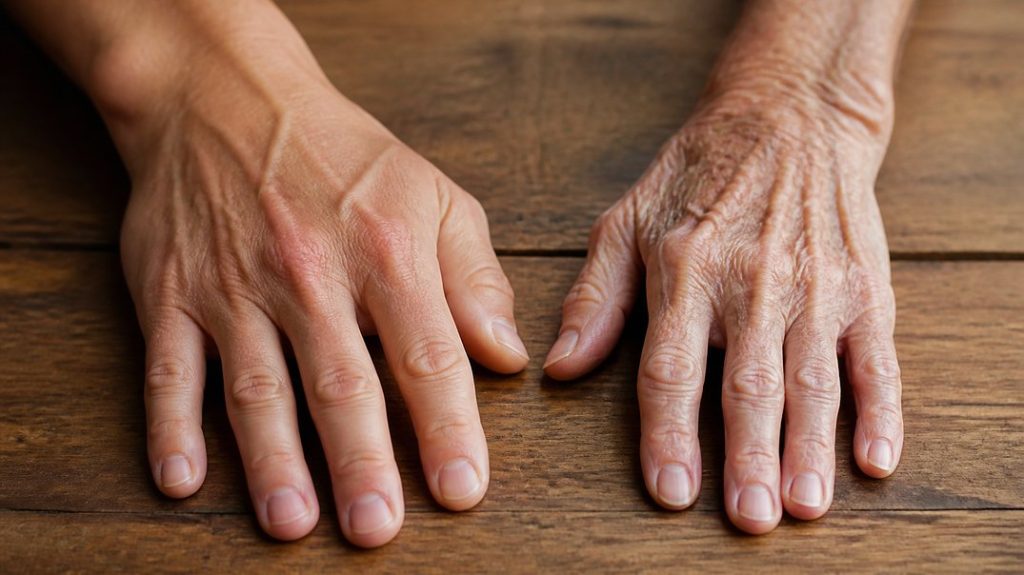
It is true that muscle changes with age are, to some degree, unavoidable. Nobody keeps the exact strength and muscle mass they had at 30 forever. That fact leads a lot of people to assume that any noticeable weakening in their 50s or 60s is just “part of getting older” and not worth a second look. In most cases, that assumption is only partly correct, and understanding where ordinary aging ends and sarcopenia begins can make the difference between accepting a slow decline and actually doing something about it.
Everyone Loses Some Muscle With Age
Starting around age 30, most people experience a slow, gradual decline in muscle mass, often estimated at somewhere between three and eight percent per decade. This is a normal part of the aging process and happens even in people who remain reasonably active. Strength tends to decline a bit faster than raw muscle size, and the pace of both typically picks up after age 60.
This baseline decline is sometimes called age-related muscle loss in a general sense, and on its own, it does not necessarily interfere with daily life. Many people in their 60s and 70s who have stayed active throughout life show relatively modest declines and continue to function well.
What Makes Sarcopenia Different From Typical Aging
Sarcopenia describes a more significant version of this same process, one where the loss of muscle mass, strength, or physical performance has progressed to the point of genuinely affecting a person’s ability to do everyday things. It is less about a fixed cutoff and more about degree and consequence.
It Is About Rate and Impact, Not Just Presence
The clearest way to separate normal aging from sarcopenia is to ask whether the changes are interfering with function. Struggling occasionally with a very heavy object is not unusual at any age. Struggling regularly to stand up from a chair, open a jar, or keep pace on a walk you used to manage easily points toward something beyond the typical, gradual decline everyone experiences.
Clinical definitions reflect this distinction. A widely used framework from the European Working Group on Sarcopenia in Older People, updated in 2019 and published in Age and Ageing, defines sarcopenia using low muscle strength as the primary indicator, confirmed by reduced muscle quantity or quality, with poor physical performance marking more severe cases. In other words, the diagnosis hinges on measurable strength and function, not simply on the presence of some decline.
Conditions That Get Confused With Sarcopenia
Sarcopenia is sometimes lumped together with a handful of related terms that describe overlapping but distinct situations. Understanding the differences can help you have a more precise conversation with a doctor.
Frailty
Frailty is a broader clinical concept that can include muscle weakness alongside other factors such as unintentional weight loss, low activity levels, exhaustion, and slow walking speed. Sarcopenia is often a major contributor to frailty, but frailty is a wider syndrome, not a synonym for muscle loss alone. A person can have sarcopenia without meeting the full criteria for frailty, particularly in earlier stages.
Cachexia
Cachexia refers to severe muscle and weight loss that occurs as a result of an underlying serious illness, such as advanced cancer or heart failure, and is typically accompanied by significant, unintentional weight loss and loss of appetite. It progresses faster and is driven by disease processes rather than the slow accumulation of age-related changes, which sets it apart from typical sarcopenia.
Sarcopenic Obesity
This term describes a pattern where muscle mass and strength decline while body fat stays the same or increases, meaning body weight may look unchanged or even go up even as muscle quality worsens. It is a useful reminder that scale weight and outward appearance are not reliable ways to rule sarcopenia out. Someone with sarcopenic obesity may never appear thin or frail, which is part of why the condition is frequently missed until strength or function has declined considerably.
Clinicians sometimes further divide sarcopenia into primary and secondary forms. Primary, or age-related, sarcopenia is attributed mainly to the aging process itself, without an obvious separate cause. Secondary sarcopenia develops in connection with another driving factor, such as a sedentary lifestyle, an inadequate diet, or an underlying disease like diabetes or chronic kidney disease. In practice, most cases involve some mix of both, since aging, activity level, and diet all interact rather than operating in isolation.
Why the Distinction Actually Matters
Drawing a clear line between typical aging and sarcopenia is not just a matter of semantics. It shapes what kind of response makes sense. Normal, mild age-related decline is generally well managed by staying reasonably active and maintaining good nutrition habits. Sarcopenia, particularly once it starts affecting daily function, usually benefits from a more structured approach, often involving supervised resistance training, a closer look at protein intake, and monitoring by a healthcare provider.
Treating sarcopenia as simply an unavoidable feature of aging can lead people to accept a level of decline that is actually responsive to intervention. On the other hand, treating every minor age-related change as a medical emergency is not helpful either. The goal is an accurate read on where you actually stand.
Questions Worth Asking Yourself
A few honest questions can help you get a rough sense of where your own experience falls before ever seeing a doctor:
- Has a specific daily task become noticeably harder over the past one to two years, rather than staying roughly the same?
- Are you compensating in ways you did not used to, such as using your arms to stand or holding railings you once ignored?
- Has your walking pace slowed enough that others notice or that you fall behind on walks you used to keep up with?
- Have you had a fall or a close call with one recently?
Answering yes to several of these is a reasonable prompt to bring the topic up with a doctor rather than assuming it is simply age catching up with you.
Where to Go From Here
Normal aging and sarcopenia sit on the same spectrum, but they are not the same thing, and the difference matters for how you respond. If several of the questions above sound familiar, our guide to how sarcopenia is diagnosed walks through exactly what a doctor will look for, and our overview of common signs and symptoms can help you get a clearer picture before that conversation even starts.


