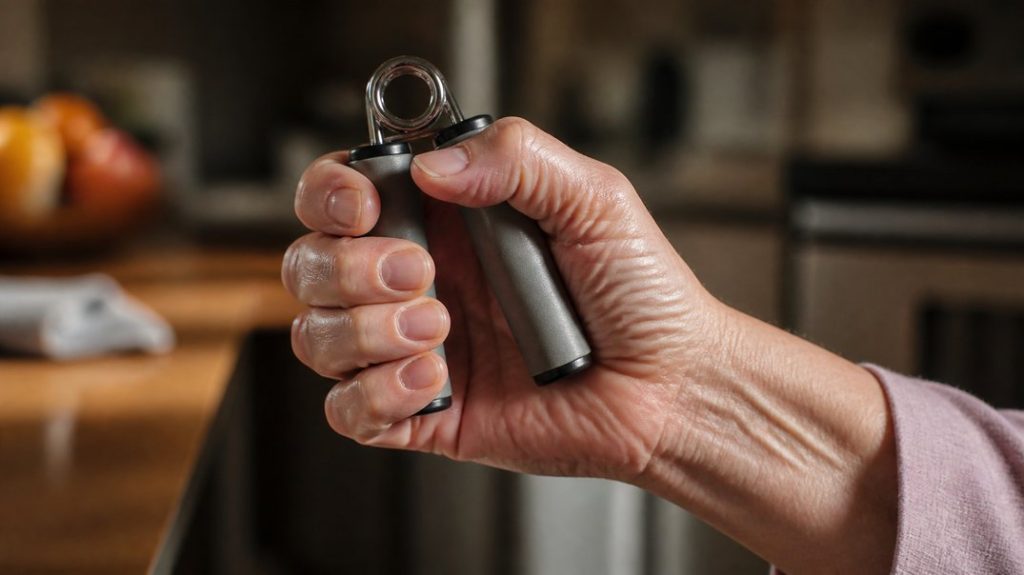
There is a strong case for it. Grip strength is quick and inexpensive to measure, and in a study of nearly 140,000 people it was linked to long-term health. Research has not yet shown that routine testing at every checkup improves outcomes, so it is reasonable to ask your doctor about it, especially if you have noticed weakness.
What Large Studies Say About Grip Strength
The PURE study, published in The Lancet in 2015, measured grip strength in 139,691 people aged 35 to 70 across 17 countries. As reported by Healio, participants were followed for a median of four years, and about 2 percent died during that time.
For every 5 kilogram lower grip strength, the risk of death from any cause was 16 percent higher (hazard ratio 1.16). Risk of cardiovascular death was 17 percent higher, the risk of non-cardiovascular death was also 17 percent higher, the risk of stroke was 9 percent higher, and the risk of heart attack was 7 percent higher. The people in the study lived in high-, middle-, and low-income countries, so the pattern was not limited to one setting. Grip strength is not just about hands. It seems to reflect overall muscle health.
What Hospital Data Add for Older Adults
A 2021 study of 8,910 hospital patients aged 65 and older in China used Asian Working Group for Sarcopenia cutoffs to define low grip strength: under 28 kilograms for men and under 18 kilograms for women. About half of the patients, 49.57 percent, fell below the line. Their 90-day mortality was 2.7 percent, compared with 1.0 percent for patients with stronger grips, and the adjusted odds ratio was 1.64.
The authors described grip strength as simple, quick, cheap, and feasible to measure. The link was stronger in patients aged 65 to 74, which hints that checking earlier may be especially useful.
What We Do Not Know Yet
Both studies are observational, which means they show an association, not cause and effect. The hospital study did not evaluate how accurately grip testing identifies people at risk, and neither study shows that routine testing at annual visits leads to better health. Those studies still need to be done.
That gap is an opportunity rather than a dead end. A simple, low-cost measure with a clear link to outcomes is exactly the type of tool researchers like to test. Meanwhile, nothing stops you from asking for the measurement yourself.
Grip Strength Is Not Fixed
A low number is not a sentence. In the frail-LESS feasibility trial, 60 adults aged 65 and older with very mild or mild frailty were coached to sit less. After six months, their grip strength had risen by 1.3 kilograms, compared with 0.1 kilograms in the usual-care group. That was a small study without significance testing, so it needs confirming.
Still, it shows why knowing your number can be motivating. A measurement taken now becomes a baseline, and a higher reading at your next visit is concrete proof that your effort is paying off.
How to Ask for a Grip Check
At your next visit, mention any changes in strength, such as trouble opening jars or rising from a chair, and ask whether your doctor or a physical therapist can measure your grip. A single number is a starting point, so ask for it to be recorded and compared over time. Our guide to home strength tests offers simple checks you can do between visits.
Low grip strength is one sign doctors consider, and diagnosis usually involves more than one measure. Our post on how sarcopenia is diagnosed explains what else may be checked, and our guide to when to talk to your doctor can help you prepare.
Quick Answers
What Is a Normal Grip Strength?
It depends on age, sex, and the guideline used. The 2021 study above defined low grip strength as under 28 kilograms for men and under 18 kilograms for women. Your doctor can interpret your result.
Does Low Grip Strength Mean I Have Sarcopenia?
Not by itself. Low grip strength is one sign doctors consider, and diagnosis usually involves more than one measure.
Can I Improve My Grip Strength?
Resistance training is the usual route to getting stronger. Our guide to resistance training basics explains where to start, and your doctor can advise on what is safe for you.