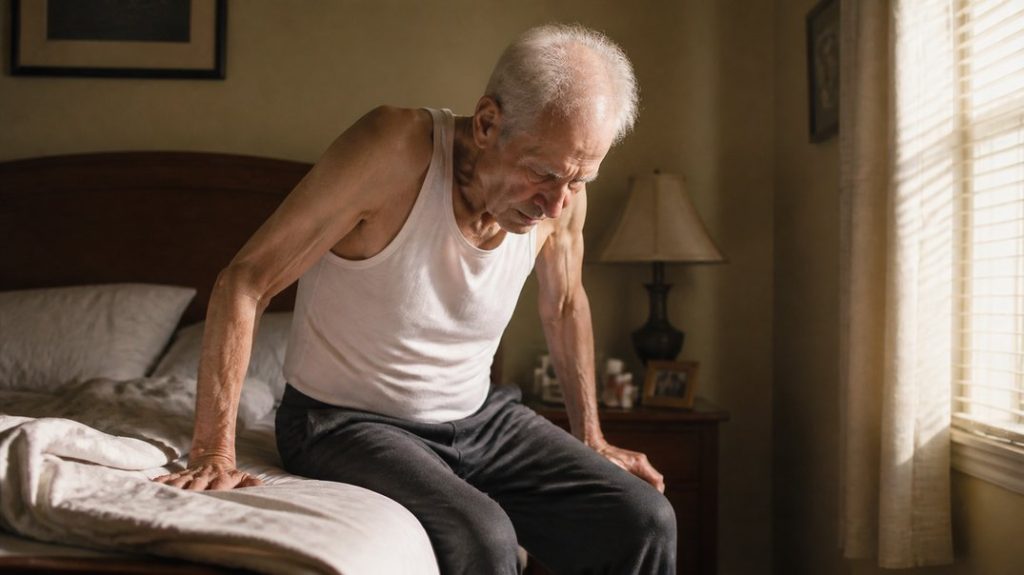
Several ordinary habits can nudge muscle loss along: sitting for long stretches, a sudden drop in daily steps, going easy on protein, and pulling back from other people. None of them is a life sentence. Each has a flip side, and small changes in these same areas are some of the easiest ways to protect your strength.
Habit One: Long Stretches of Sitting
In a pooled analysis of 16 studies covering more than one million people, those who were the least active and sat eight or more hours a day had a 59 percent higher risk of dying than the most active people who sat under four hours. Television time showed a similar pattern. These findings measure death rather than muscle, but they show how much daily habits matter.
For muscle itself, the frail-LESS feasibility trial is encouraging. Adults aged 65 and older coached to sit less cut about 25 minutes of daily sitting, and their grip strength rose by 1.3 kilograms over six months, compared with 0.1 kilograms in the usual-care group. It was a small study, so it needs confirming.
Habit Two: Sudden Drops in Daily Steps
Illness, bad weather, or a scare can shrink your daily steps overnight. A 2019 review found that when older adults cut their steps to 750 to 1,500 a day, muscle protein synthesis fell 13 to 26 percent, and knee strength fell 6 to 9 percent in some studies, with incomplete recovery. The authors admit that older-adult data are limited and that the idea that older adults recover poorly from disuse is partly a hypothesis.
Even one week can matter. In a small bed rest trial of healthy adults averaging 68 years old, knee strength fell 12 percent. If you are recovering from an illness, our guide to muscle loss after illness explains how to rebuild gradually.
Habit Three: Going Light on Protein
Harvard’s Men’s Health Watch notes that research suggests older adults need more protein than younger adults. The 2019 review above adds that calorie deficits accelerated lean mass loss during bed rest, and that spreading protein evenly across meals may help. In one recovery-week study it describes, whey protein supported more muscle protein synthesis than collagen.
Many people eat most of their protein at dinner and very little at breakfast. Moving some of it earlier in the day is a simple fix. Our guide to protein timing and distribution explains how to do it.
Habit Four: Pulling Back From People
In the Chinese study of 7,970 adults who started without sarcopenia, loneliness was linked to higher odds of developing it over four years (odds ratio 1.27). The authors caution that the design cannot prove cause and effect. Social plans often come with built-in movement, so a weekly walking date or class helps twice.
Simple Swaps That Protect Muscle
Stand or walk for a minute each hour. Aim for steady daily steps, even on gray days. Add protein to every meal. Plan strength work on at least two days a week, as the U.S. guidelines recommend. Our guide to resistance training basics is a good place to begin.
If illness or weather cuts your steps, restart gently and add a few easy leg exercises. In one study described in the 2019 review, low-load leg training three times a week protected muscle in older adults during two weeks of reduced activity. It is also encouraging that a Brigham and Women’s Hospital physician, quoted by Harvard, says it is never too late to rebuild muscle and maintain it.
Quick Answers
How Fast Can Inactivity Cause Muscle Loss?
In a small study of healthy adults averaging 68, one week of bed rest cut knee strength by about 12 percent. Other studies saw losses with step reductions too.
Does Protein Timing Matter?
A review notes that spreading protein evenly across meals may help. A doctor or dietitian can suggest amounts that suit your health.
Can I Win Back Lost Muscle?
Often, yes. A Brigham and Women’s Hospital physician quoted by Harvard says it is never too late to rebuild muscle and maintain it.


